ANNUAL ADVERTISING RATES FOR INSURE-DIGEST

Annual Advertisement Rates
Showing posts with label economic meltdown. Show all posts

Saturday, June 16, 2018

Turkey - Presidential Elections: Can Erdogan's economic record help him keep seat amid challenges? - by Umut Uras

Sitting by his small telephone sale and repair shop in the buzzing Istanbul district of Besiktas, Hasan Kus is pessimistic about the future of Turkey's economy.

A little over a week before the country's key elections, the 44-year-old believes the financial situation will worsen regardless the outcome of the June 24 polls. "People are merely trying to pick the better scenario, compared to the other ones," says Kus, before trying to sell a phone charger to a customer.

The economy is going to be a decisive factor in the upcoming vote that will transition Turkey from a parliamentary system to an executive one, in line with constitutional changes approved in a referendum last year.

The presidential and parliamentary polls will be held under a state of emergency, in place since July 2016 following a failed deadly coup blamed by the government on the movement of Fethullah Gulen, a US-based self-exiled religious leader.

On the economic front, the polls come against a conflicting backdrop of skyrocketing growth rate - up 7.4 percent last year - and a depreciating currency.

The Turkish lira dropped more than 20 percent against the US dollar this year, prompting the Central Bank to raise interest rates multiple times to shore up one of the world's worst-performing currencies. Meanwhile, both inflation and current account deficit are on the rise.

Under these circumstances, the Turkish electorate appears divided about who is best equipped to deal with the ongoing economic uncertainties.

Voters who blame the uncertainty on President Recep Tayyip Erdogan and his ruling Justice and Development Party (AK Party) believe change is needed after 15 years to correct the policies that spawned the current problems. 

Note EU-Digest: It is time for a change in Turkey after 15 years of Erdogan. President Erdogan has brought Turkey close to total economic ruin, and based on latest polls can only win the upcoming Presidential elections if he succeeds, once again, to have his associates fiddle with the ballot boxes and votes to change the outcome......?

Thursday, June 30, 2016

Saudi Arabia: The Next “Black Swan” For The Global Economy - by Marcello Minenna

Just two weeks ago, the Saudi government announced that in September it will hit the international bond markets with a Dollar denominated issue. In the Kingdom’s history, this is the first foreign debt issue. Incredible though it may appear, the sheiks, holders of the world’s largest oil reserves, appear cash-starved. The Saudi monarchy that in 2011 was achieving an astounding fiscal surplus of 20% of GDP with zero public debt and sitting on over $700 billion of foreign reserves, has markedly seen its fortunes go into reverse since the oil price collapse in mid-2014. In 2015 the surplus morphed into a nasty deficit of up to 16% of GDP, public debt climbed to 10% while the currency reserves declined to below $ 600 billion. The Kingdom enacted even a few cuts in public expenditures, a measure unheard-of in the land of a guaranteed lifetime employment in the government sector.

In well-informed circles, the theory has been that the sudden decline in oil price was a deliberate strategy orchestrated by the Saudis, to kick the “shale oil” producers out of the market. Since the US producers rely heavily on debt and operate at loss when the oil price slips under $60 a barrel, such a plan could have worked. But it did not happen: with the Fed nailing interest rates around zero, the banks and the investment funds have continued to finance the drillers, who in turn have reduced production and cut costs. The result is that few drillers have effectively been pushed out of the market.

Now the Saudi strategy is backfiring and the big sharks of financial speculation are sharpening their teeth. The target is the fixed exchange rate between the Dollar and the Riyal (the Saudi currency). This monetary agreement between the two governments has lasted more than 30 years. The US economy and the Saudi elites have benefited immensely from it, with the latter accumulating sheer amounts of financial wealth.

The “Petrodollar” system worked in this way: US importers settled oil purchases only in Dollars at a stable, favorable exchange rate (by 1986 fixed at 0.26$ for 1 Riyal). In its turn, the Saudi Kingdom was committed to reinvest the profits in the US economy through the purchase of Treasuries, with the not negligible benefit of the guarantee of a continuous US military umbrella. All trades have been kept confidential for over 40 years till May 2016: neither the US nor the Kingdom has ever released detailed information about the involvement of the Saudis in the refinancing of US public debt.

In recent years, cracks have begun to surface in the apparently rock-solid deal. Thanks to the shale oil boom and the increasing market share of Iraqi and Iranian oil, the US is less dependent on the Saudis. The confidentiality shield has been lifted and finally the US Treasury revealed the amount of debt in the hands of the Kingdom: $120 billion, and it’s reasonable to believe that at least a further $ 100 billion are discreetly held offshore. In the meantime, the US Senate has allowed the victims of 9/11 to sue the Saudi Kingdom for its eventual responsibility for the attacks. All these moves can be interpreted as a progressive cooling in the US-Saudi political relationship.


Read more Saudi Arabia: The Next “Black Swan” For The Global Economy

Monday, May 30, 2016

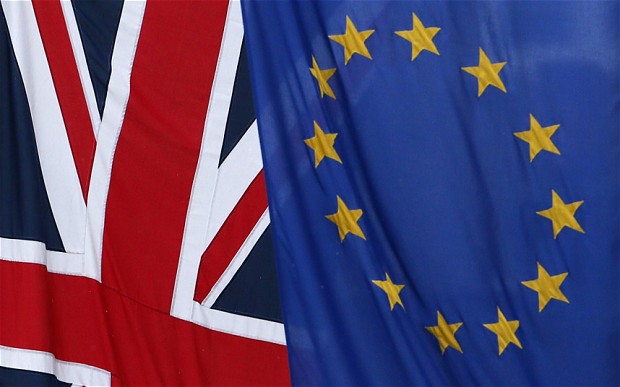
Britain: Economists overwhelmingly reject Brexit in boost for Cameron

Nine out of 10 of Britain’s top economists working across academia, the City, industry, small businesses and the public sector believe the British economy will be harmed by Brexit, according to the biggest survey of its kind ever conducted.

A poll commissioned for the Observer and carried out by Ipsos MORI, which drew responses from more than 600 economists, found 88% saying an exit from the EU and the single market would most likely damage Britain’s growth prospects over the next five years.

A striking 82% of the economists who responded thought there would probably be a negative impact on household incomes over the next five years in the event of a Leave vote, with 61% thinking unemployment would rise.

Those surveyed were members of the profession’s most respected representative bodies, the Royal Economic Society and the Society of Business Economists, and all who replied did so voluntarily.

Paul Johnson, director of the independent Institute for Fiscal Studies, said the findings, from a survey unprecedented in its scale, showed an extraordinary level of unity. “For a profession known to agree about little, it is pretty remarkable to see this degree of consensus about anything,” Johnson said. “It no doubt reflects the level of agreement among many economists about the benefits of free trade and the costs of uncertainty for economic growth.”

The poll also found a majority of respondents – 57% – held the view that a vote for Brexit on 23 June would blow a hole in economic growth, cutting GDP by more than 3% over the next five years. Just 5% thought that there would probably be a positive impact.

The economists were also overwhelmingly pessimistic about the long-term economic impact of leaving the EU and the single market. Some 72% said that a vote to leave would most likely have a negative impact on growth for 10-20 years.

Just 4% of respondents who thought Brexit would mostly likely have a negative impact on GDP over the initial five years said it would have a positive effect over the longer term.

The findings – which come as 37 faith leaders write in a letter to the Observer warning that Brexit will damage the causes of peace and the fight against poverty – will bolster David Cameron and George Osborne, who have both argued strongly that the economy will be hit hard in the event of Brexit.

Read more: Economists overwhelmingly reject Brexit in boost for Cameron | Politics | The Guardian

Tuesday, May 3, 2016

EU Brexit ‘could boost eurozone GDP’ - by Chris Giles

Eurozone economies would gain at the expense of Britain if the UK voted to leave the EU, a leading French economist has predicted, with a relocation of financial activity out of London causing sterling to plummet.

Mathilde Lemoine, a prominent member of the French government’s budgetary watchdog and chief economist of the Edmond de Rothschild private bank, said sterling could rapidly fall 34 per cent against the euro.

The report by the private bank demonstrated how European finance houses could profit from Brexit if the Leave campaign wins the referendum on June 23.

Ms Lemoine, also a former adviser to the French prime minister, wrote that the rapid relocation of financial activity would add to the “brutal drop” in sterling she expects after a vote for Brexit. 

Such a vote, she said, would “immediately” reopen the question of the location of clearing houses for eurozone business, which are mostly in London after the UK government won a case last year in the European Court of Justice. It ruled against the European Central Bank’s requirement that clearing houses of euro-denominated business between European banks had to be based in the eurozone and regulated by the ECB.

After a Brexit vote, “it is certain that the grounds for the European Court of Justice’s decision would no longer exist,” Ms Lemoine wrote. “As a result, the European Council could immediately require clearing houses handling euro transactions to be located in the eurozone. On our calculations, sterling would fall 34 per cent against the euro in the space of three months”.

A fall in sterling of that size would hit incomes by raising import prices and UK inflation substantially, while helping British exporters of price-sensitive goods.

While the Edmond de Rothschild report suggested the overall effect of Brexit in the short term is hard to quantify, the relocation of financial activity would hit UK gross domestic product by about 1 per cent, it said.

“Brexit would undeniably require major short-term adjustments on both sides of the Channel,” Ms Lemoine said, with a reduction of trade, the value of sterling, higher prices and a greater cost to servicing debt.

Read more: Brexit ‘could boost eurozone GDP’ - FT.com