While most American cities are opening up and lifting COVID-19 restrictions, one of the biggest cities in the world has been shut back down. Shanghai, China's most populous city with some 25 million inhabitants, was largely at a standstill on Friday as China battles its worst wave of coronavirus infections since the start of the pandemic.
Read more at:
China extends Shanghai coronavirus lockdown as frustration mounts over strict "zero-COVID" policy - CBS News
Showing posts with label Corona Virus. Show all posts
Showing posts with label Corona Virus. Show all posts
Friday, April 1, 2022
Monday, March 7, 2022
Corona Virus - lasting effects: They contracted COVID more than a year ago. How these 4 people are fighting lasting effects
He suffered two strokes, COVID-induced pneumonia, a medically induced coma and several months wiped from his memory.
More than a year after his initial infection, he's still not back to the person he was before the coronavirus.
That's the case for many so-called COVID-19 long-haulers in Horry County, South Carolina, and across the country.
Hardee's lung capacity is still only at 38%.
Michelle Ford can't taste or smell her food.
Robert Bellamy was diagnosed with diabetes.
Dr. Lisa Centilli felt depressed, frustrated and alone.
They attribute it all to the coronavirus.
Read more at https://medicalxpress.com/news/2022-03-covid-year-people-effects.html
Hardee's lung capacity is still only at 38%.
Michelle Ford can't taste or smell her food.
Robert Bellamy was diagnosed with diabetes.
Dr. Lisa Centilli felt depressed, frustrated and alone.
They attribute it all to the coronavirus.
Read more at https://medicalxpress.com/news/2022-03-covid-year-people-effects.html

Saturday, January 1, 2022
USA: Florida reports 56,865 new COVID cases, positivity rate continues to soar
After days of record-breaking COVID-19 cases in the Sunshine State, Florida reported 56,865 new cases on Saturday and the positivity rates in South Florida continue to soar.
According to the latest figures released, both Miami-Dade and Broward counties have positivity rates of 30%.
Public health experts don’t consider the virus to be under control in an area unless the positivity rate is under 5%.
Read more at: Florida reports 56,865 new COVID cases, positivity rate continues to soar
According to the latest figures released, both Miami-Dade and Broward counties have positivity rates of 30%.
Public health experts don’t consider the virus to be under control in an area unless the positivity rate is under 5%.
Read more at: Florida reports 56,865 new COVID cases, positivity rate continues to soar
Thursday, December 30, 2021
Netherlands Announces Plan To Give People Up to Six Doses of COVID Vaccine
Hugo de Jonge, health minister of The Netherlands, has indicated the country could be preparing another three coronavirus booster vaccines.
De Jonge wrote a letter to his country's parliament Wednesday suggesting the Netherlands should consider additional rounds of booster vaccines to fight new variants, with two of these in 2022 and another shot in 2023.
Read more at: Netherlands Announces Plan To Give People Up to Six Doses of COVID Vaccine
De Jonge wrote a letter to his country's parliament Wednesday suggesting the Netherlands should consider additional rounds of booster vaccines to fight new variants, with two of these in 2022 and another shot in 2023.
Read more at: Netherlands Announces Plan To Give People Up to Six Doses of COVID Vaccine
Tuesday, November 23, 2021
Netherlands: EU wants calm amid virus protests; rioters called 'idiots'
In the face of demonstrations across much of Europe protesting tough COVID-19 measures over the past days, authorities on Monday pleaded for patience, calm and a willingness to get a vaccine shot in the arm as infections spike upward again.
And for those who abused the protests to foment violence, Dutch Prime Minister Mark Rutte just called them “idiots.”
Protest marches from Zagreb to Rome and from Vienna to Brussels and Rotterdam, bringing tens of thousands out, all had one message from a coronavirus-weary crowd — we’ve had enough!
“Not able to work where you want work, to be where you want to be. That’s not what we stand for, that’s not freedom,” said Eveline Denayer, who was at Sunday’s march in Brussels, which drew a crowd of over 35,000.
“We live in Western Europe and we just want to be free, how we were before,” she said.
Read more at: https://apnews.com/article/coronavirus-pandemic-health-riots-netherlands-rotterdam-445b8e7e0b3c53081d6525c83dc4dbca
And for those who abused the protests to foment violence, Dutch Prime Minister Mark Rutte just called them “idiots.”
Protest marches from Zagreb to Rome and from Vienna to Brussels and Rotterdam, bringing tens of thousands out, all had one message from a coronavirus-weary crowd — we’ve had enough!
“Not able to work where you want work, to be where you want to be. That’s not what we stand for, that’s not freedom,” said Eveline Denayer, who was at Sunday’s march in Brussels, which drew a crowd of over 35,000.
“We live in Western Europe and we just want to be free, how we were before,” she said.
Read more at: https://apnews.com/article/coronavirus-pandemic-health-riots-netherlands-rotterdam-445b8e7e0b3c53081d6525c83dc4dbca
Saturday, November 20, 2021
The Netherlands:Rotterdam police open fire as Covid protest turns into ‘orgy of violence’
In what the Dutch city’s mayor described as an “orgy of violence”, crowds of several hundred rioters orched cars, set off fireworks and threw rocks at police during the protests on Friday evening. Police responded with warning shots and water cannon.
Police said on Twitter on Saturday that 51 people had been arrested, about half of whom were under 18.
“Three rioters were wounded when they were hit by bullets, they remain in hospital,” police added, in an update after earlier reporting two wounded.
Read more at: https://www.theguardian.com/world/2021/nov/19/the-netherlands-rotterdam-police-open-fire-as-covid-protest-turns-violent?CMP=Share_AndroidApp_Other
Police said on Twitter on Saturday that 51 people had been arrested, about half of whom were under 18.
“Three rioters were wounded when they were hit by bullets, they remain in hospital,” police added, in an update after earlier reporting two wounded.
Read more at: https://www.theguardian.com/world/2021/nov/19/the-netherlands-rotterdam-police-open-fire-as-covid-protest-turns-violent?CMP=Share_AndroidApp_Other
Friday, August 27, 2021
Covid -19: Does delta cause more severe COVID-19? Here's what we know — and don't
A small-but-growing body of research suggests the highly contagious delta variant raises your risk of serious illness, but it's tough to know for sure if it's the root cause of more severe COVID-19, both researchers and outside experts say.
The latest findings out of Singapore, published this week in the peer-reviewed medical journal Clinical Infectious Diseases, involve a comparison between 829 hospitalized patients infected with one of three variants of concern — including delta — and 846 patients admitted to hospitals with the original coronavirus strain in early 2020.
Read more at: Does delta cause more severe COVID-19? Here's what we know — and don't | CBC News
The latest findings out of Singapore, published this week in the peer-reviewed medical journal Clinical Infectious Diseases, involve a comparison between 829 hospitalized patients infected with one of three variants of concern — including delta — and 846 patients admitted to hospitals with the original coronavirus strain in early 2020.
Read more at: Does delta cause more severe COVID-19? Here's what we know — and don't | CBC News
Wednesday, August 25, 2021
Global Covid-19 caseload tops 213 mn
The global coronavirus caseload has topped 213 million, while the deaths have surged to more than 4.45 million and vaccinations soared to over 4.99 billion, according to the Johns Hopkins University.
In its latest update on Wednesday morning, the University's Center for Systems Science and Engineering (CSSE) revealed that the current global caseload, death toll and vaccination tally stood at 213,098,413, 4,450,408 and 4,995,430,625, respectively.
The US continues to be the worst-hit country with the world's highest number of cases and deaths at 38,053,653 and 630,663, respectively, according to the CSSE.
Read more at: Global Covid-19 caseload tops 213 mn - Netindia123.com
In its latest update on Wednesday morning, the University's Center for Systems Science and Engineering (CSSE) revealed that the current global caseload, death toll and vaccination tally stood at 213,098,413, 4,450,408 and 4,995,430,625, respectively.
The US continues to be the worst-hit country with the world's highest number of cases and deaths at 38,053,653 and 630,663, respectively, according to the CSSE.
Read more at: Global Covid-19 caseload tops 213 mn - Netindia123.com
Tuesday, August 24, 2021
Pfizer vaccine full approval FDA: What FDA’s full approval of Pfizer-BioNTech COVID-19 vaccine means - by Sara Berg
“Although the three widely available vaccines for COVID-19 have been shown safe and highly effective through intense study and research, the FDA’s announcement Monday should instill confidence in those who, until now, have been wary of the emergency use designation given to these vaccines,” said AMA President Gerald E. Harmon, MD. “The message could not be more clear: This vaccine is safe and highly effective in preventing severe illness, hospitalization and death due to COVID-19.”
This is the result of months of work, robust data evaluation and a thorough, comprehensive review process that has protected more than 100 million Americans from severe COVID-19 complications. It is a milestone and major step forward in the worldwide effort to end this pandemic.
Read more at: What FDA’s full approval of Pfizer-BioNTech COVID-19 vaccine means | American Medical Association
This is the result of months of work, robust data evaluation and a thorough, comprehensive review process that has protected more than 100 million Americans from severe COVID-19 complications. It is a milestone and major step forward in the worldwide effort to end this pandemic.
Read more at: What FDA’s full approval of Pfizer-BioNTech COVID-19 vaccine means | American Medical Association
Thursday, January 7, 2021
The Netherlands: Population growth halves as coronavirus cuts immigration
The population of the Netherlands grew by 63,000
last year, half the increase recorded in 2019, according to new figures from national statistics agency CBS.
The increase, driven largely by EU migration, took the population to almost 17.5 million by the end of the year, the CBS said in its initial forecast. The decline in growth is due both to more people dying in the first half of the year and a downturn in the number of new immigrants and international students coming to the Netherlands, the CBS said.
Read more at: Population growth halves as coronavirus cuts immigration - DutchNews.nl
The increase, driven largely by EU migration, took the population to almost 17.5 million by the end of the year, the CBS said in its initial forecast. The decline in growth is due both to more people dying in the first half of the year and a downturn in the number of new immigrants and international students coming to the Netherlands, the CBS said.
Read more at: Population growth halves as coronavirus cuts immigration - DutchNews.nl
Saturday, March 28, 2020
U.S.-Europe Travel Ban: The Most Impacted Airlines, Countries And Airport Hubs In Trump’s Fight Against Coronavirus - by Will Horton
viation’s most important international market, travel between Europe
and North America, will be severely impacted, at least in the
short-term, from U.S. President Donald Trump’s announcement of a 30-day restriction on travel between the U.S. and most of Europe. The measure is an effort to limit the spread of coronavirus in the U.S.
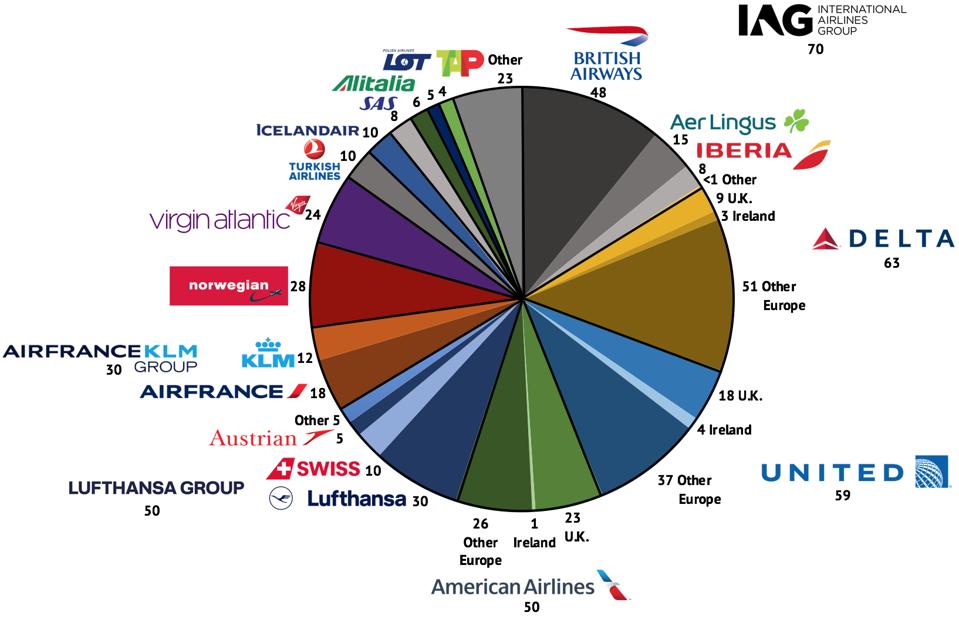
The restriction applies to foreign nationals who, within the last 14 days, have been to one of the 26 countries in the Schengen Area, a European bloc with open border agreements. The United Kingdom and Ireland are not part of Schengen, and are so far excluded from the restrictions. There was initial confusion of the details due to conflicting information between President Trump, his aides and other government departments.
 U.S. citizens, and others with exemptions, can continue travel but
will be re-directed through certain U.S. airports, as has been done for
passengers from Mainland China and Iran.
U.S. citizens, and others with exemptions, can continue travel but
will be re-directed through certain U.S. airports, as has been done for
passengers from Mainland China and Iran.
Aviation will be directly impacted from passengers unable to travel, and indirectly affected as the travel restriction sends negative connotations and sees consumers lose market confidence.
The situation is dynamic, in its early days, and difficult to precisely predict. Airlines were already taking different measures on trans-Atlantic flight capacity with changes being rolled out or evaluated in headquarters. The flow of passengers between the U.S. and Europe is not easily delineated. Europe’s strong international airlines and airport hubs mean that Ireland and the U.K., exempt from the ban, will be impacted as passengers use those countries to connect between the U.S. and other European destinations. The Netherlands, which is covered in the ban, has passengers transfer between the U.K. and U.S. Canada is also a hub.
Countries most impacted: Germany, France and Netherlands. The U.K., which is exempt from the ban, is the single largest European market from the U.S., accounting for 31% of flights – 137 a day carrying 31,000 passengers in April 2019. This is almost as big as the next three largest countries combined: Germany (13%), France (11%), and the Netherlands (9%) for a total of 33% or 143 flights a day carrying 35,000 passengers.
The ban directly impacts 266 daily flights from Europe to the U.S. Indirect impacts will affect 173 other daily flights to the U.S. from European countries not covered by the ban, mainly the U.K. as well as Ireland, which had 5-6% of flights and passengers.
Read more at: U.S.-Europe Travel Ban: The Most Impacted Airlines, Countries And Airport Hubs In Trump’s Fight Against Coronavirus
The restriction applies to foreign nationals who, within the last 14 days, have been to one of the 26 countries in the Schengen Area, a European bloc with open border agreements. The United Kingdom and Ireland are not part of Schengen, and are so far excluded from the restrictions. There was initial confusion of the details due to conflicting information between President Trump, his aides and other government departments.
U.S. citizens, and others with exemptions, can continue travel but
will be re-directed through certain U.S. airports, as has been done for
passengers from Mainland China and Iran.Aviation will be directly impacted from passengers unable to travel, and indirectly affected as the travel restriction sends negative connotations and sees consumers lose market confidence.
The situation is dynamic, in its early days, and difficult to precisely predict. Airlines were already taking different measures on trans-Atlantic flight capacity with changes being rolled out or evaluated in headquarters. The flow of passengers between the U.S. and Europe is not easily delineated. Europe’s strong international airlines and airport hubs mean that Ireland and the U.K., exempt from the ban, will be impacted as passengers use those countries to connect between the U.S. and other European destinations. The Netherlands, which is covered in the ban, has passengers transfer between the U.K. and U.S. Canada is also a hub.
Countries most impacted: Germany, France and Netherlands. The U.K., which is exempt from the ban, is the single largest European market from the U.S., accounting for 31% of flights – 137 a day carrying 31,000 passengers in April 2019. This is almost as big as the next three largest countries combined: Germany (13%), France (11%), and the Netherlands (9%) for a total of 33% or 143 flights a day carrying 35,000 passengers.
The ban directly impacts 266 daily flights from Europe to the U.S. Indirect impacts will affect 173 other daily flights to the U.S. from European countries not covered by the ban, mainly the U.K. as well as Ireland, which had 5-6% of flights and passengers.
Read more at: U.S.-Europe Travel Ban: The Most Impacted Airlines, Countries And Airport Hubs In Trump’s Fight Against Coronavirus
Monday, March 23, 2020
The Netherlands: Coranavirus Repatriation €10 million fund launched to bring Dutch Citizens back to the Netherlands
Travelers stuck outside of the Netherlands due to flights being halted
or severely limited in the wake of the global coronavirus pandemic have a
new option to get help to return home. A ten-million euro fund was
launched on Monday to provide assistance to stranded fliers, the
Ministry of Foreign Affairs announced on Monday.
Essentially, passengers will contribute 300 euros for their own repatriation if returning back from the European Union or 20 countries near the EU. The personal contribution rises to 900 euros for countries further away from the list of EU-adjacent countries.
"We need to do our utmost to get these people home safely," said Stef Blok, the Dutch foreign minister, of the complicated situation. "Because of the huge impact of the coronavirus, this group in particular really has nowhere else to turn."
Read more at: €10 million fund launched to bring people back to Netherlands | NL Times
Essentially, passengers will contribute 300 euros for their own repatriation if returning back from the European Union or 20 countries near the EU. The personal contribution rises to 900 euros for countries further away from the list of EU-adjacent countries.
"We need to do our utmost to get these people home safely," said Stef Blok, the Dutch foreign minister, of the complicated situation. "Because of the huge impact of the coronavirus, this group in particular really has nowhere else to turn."
Read more at: €10 million fund launched to bring people back to Netherlands | NL Times
Saturday, March 21, 2020
EU Unity Needed More than Ever: EU leaders need to be communicating a shared vision to get us through the coronavirus crisis
The role of the European institutions has been seriously questioned
during the past two weeks. As a passionate European, this hurts to see.
Despite the efforts of the European Commission to help and to intervene
in the crisis, member states have decided rather to take a national
approach and to focus less on coordination and solidarity. The fact that
the European institutions are not being seen as problem solvers tells a
relevant and consequential story. Moreover, recent developments speak
volumes about how much trust national leaders actually place -
undeservingly - in the President of the European Commission, the
commissioners and their teams.
The Commision has the opportunity to step up its communications game, since nobody else is really standing up for Europe (locally as well as globally) in these critical times. Before we achieve “Global Europe,” let us secure “Community Europe.” The Commission should act without expecting any further mandate since Europe is, as Emmanuel Macron put it on Monday in regard to France, "at war." The continent is now, after all, the new global "epicentre" of COVID-19, so communication will be paramount and the way the EU does so on key issues will matter.
First, they should concentrate on EU values and delivery amid health concerns. More important than the political relations between member states and the European institutions is the sentiment that European solidarity is as scarce as medical masks and scrubs. The initial response to the Italian call for help is not something Europe should be proud of. The option overwhelmingly embraced by national governments to close borders also highlights the difficulty of coordination at the EU level: when panic comes, we go national. Maybe expectations are too high and the crisis too deep, but, at the end of the day, what remains is the perception that every country is on its own. Perhaps this impression is wrong or will be changed as events unfold. But this should be part of a serious conversation about what European solidarity means in good and, more importantly, bad times. Here again, the European Commission - and empathically, its leader - should lead in the months to come. In times of crisis, people follow examples: think Churchill (alas, Brexit!) not chilling out.
Second, the economy. More broadly, the entire debacle over medical products and equipment brings a key question about economic globalisation and global value chains. The COVID-19 pandemic brings to the fore the idea that Europe cannot externalise everything - a reframing of strategic autonomy to include this is in order. Maintaining production capacity and facilities for essential products is fundamental, and here the strategic interest is more important than the generous principles of open trade and free markets. It is hard to say what will be the dominant view at the end of the crisis, but, at this moment, everyone is asking for expansion of the State and for more state interventions, putting the EU and more widely, the liberal democratic economic model, under stress.
Read more at: EU leaders need to be communicating a shared vision to get us through the coronavirus crisis ǀ View | Euronews
The Commision has the opportunity to step up its communications game, since nobody else is really standing up for Europe (locally as well as globally) in these critical times. Before we achieve “Global Europe,” let us secure “Community Europe.” The Commission should act without expecting any further mandate since Europe is, as Emmanuel Macron put it on Monday in regard to France, "at war." The continent is now, after all, the new global "epicentre" of COVID-19, so communication will be paramount and the way the EU does so on key issues will matter.
First, they should concentrate on EU values and delivery amid health concerns. More important than the political relations between member states and the European institutions is the sentiment that European solidarity is as scarce as medical masks and scrubs. The initial response to the Italian call for help is not something Europe should be proud of. The option overwhelmingly embraced by national governments to close borders also highlights the difficulty of coordination at the EU level: when panic comes, we go national. Maybe expectations are too high and the crisis too deep, but, at the end of the day, what remains is the perception that every country is on its own. Perhaps this impression is wrong or will be changed as events unfold. But this should be part of a serious conversation about what European solidarity means in good and, more importantly, bad times. Here again, the European Commission - and empathically, its leader - should lead in the months to come. In times of crisis, people follow examples: think Churchill (alas, Brexit!) not chilling out.
Second, the economy. More broadly, the entire debacle over medical products and equipment brings a key question about economic globalisation and global value chains. The COVID-19 pandemic brings to the fore the idea that Europe cannot externalise everything - a reframing of strategic autonomy to include this is in order. Maintaining production capacity and facilities for essential products is fundamental, and here the strategic interest is more important than the generous principles of open trade and free markets. It is hard to say what will be the dominant view at the end of the crisis, but, at this moment, everyone is asking for expansion of the State and for more state interventions, putting the EU and more widely, the liberal democratic economic model, under stress.
Read more at: EU leaders need to be communicating a shared vision to get us through the coronavirus crisis ǀ View | Euronews
Tuesday, March 17, 2020
Socialism USA : Why are Americans warming to socialism? Because capitalism has failed them-by Arwa Mahdawi
The S-word is something of a red herring – what many voters want is a change from the dismal status quo, writes Arwa Mahdawi
Read more at:
https://www.theguardian.com/commentisfree/2020/mar/03/why-are-americans-warming-to-socialism-because-capitalism-has-failed-the
Read more at:
https://www.theguardian.com/commentisfree/2020/mar/03/why-are-americans-warming-to-socialism-because-capitalism-has-failed-the
Monday, March 16, 2020
Friday, March 13, 2020
Coronavirus: The economic toll taken by the coronavirus is growing across the US
The economic damage caused by the coronavirus is growing as Americans change their behavior.
Read more at :
https://www.usatoday.com/story/money/2020/03/13/coronavirus-toll-taken-coronavirus-growing-across-us/5032674002/
Read more at :
https://www.usatoday.com/story/money/2020/03/13/coronavirus-toll-taken-coronavirus-growing-across-us/5032674002/
Tuesday, March 10, 2020
Monday, March 9, 2020
US Economy Meltdown: Dow plunges over 2,000 points, oil collapses amid price war and coronavirus - by Jonathan Garber
U.S. equity markets tumbled Monday after an oil price war broke out between Saudi Arabia and Russia and amid new cases of coronavirus, especially in America.
The Dow Jones Industrial Average closed over 2,000 points lower, coming back from a point drop of more than 2,150 points, or 8.2 percent, at session lows while the S&P 500 and Nasdaq Composite were lower by 7.9 percent and 7.2 percent, respectively.
Monday's sharp selloff, which caused the major averages to be temporarily halted due to volatility, caused the New York Federal Reserve to increase its daily cash injections into the banking system to $150 billion from $100 billion.
The stock-market's steep slide comes after a production dispute between OPEC members, led by Saudi Arabia, and Russia sent West Texas Intermediate crude oil, the U.S. benchmark, plunging by as much as 33.8 percent, the most since the outbreak of the 1991 Persian Gulf War, to a low of $27.34 a barrel in overnight trading. The energy component finished the day down 24.59 percent at $31.13 a barrel.
Note EU-Digest: This is what happens when you elect a President who is a complete "ignoramas", lies like there is no tomorrow, says he knows more about the Corona Virus than the medical profession, brags he is the best deal maker in the world, wants only "yes men" in his cabinet, and unfortunately, that is "only the top of the Trump iceberg drama".
Read more at: Dow plunges over 2,000 points, oil collapses amid price war and coronavirus | Fox Business
| Ticker | Security | Last | Change | Change % | ||||
|---|---|---|---|---|---|---|---|---|
| I:DJI | DOW JONES AVERAGES | 23851.02 | -2,013.76 | -7.79% | ||||
| SP500 | S&P 500 | 2758.65 | -213.72 | -7.19% | ||||
| I:COMP | NASDAQ COMPOSITE INDEX | 7985.59538 | -590.02 | -6.88% |
The Dow Jones Industrial Average closed over 2,000 points lower, coming back from a point drop of more than 2,150 points, or 8.2 percent, at session lows while the S&P 500 and Nasdaq Composite were lower by 7.9 percent and 7.2 percent, respectively.
Monday's sharp selloff, which caused the major averages to be temporarily halted due to volatility, caused the New York Federal Reserve to increase its daily cash injections into the banking system to $150 billion from $100 billion.
The stock-market's steep slide comes after a production dispute between OPEC members, led by Saudi Arabia, and Russia sent West Texas Intermediate crude oil, the U.S. benchmark, plunging by as much as 33.8 percent, the most since the outbreak of the 1991 Persian Gulf War, to a low of $27.34 a barrel in overnight trading. The energy component finished the day down 24.59 percent at $31.13 a barrel.
Note EU-Digest: This is what happens when you elect a President who is a complete "ignoramas", lies like there is no tomorrow, says he knows more about the Corona Virus than the medical profession, brags he is the best deal maker in the world, wants only "yes men" in his cabinet, and unfortunately, that is "only the top of the Trump iceberg drama".
Read more at: Dow plunges over 2,000 points, oil collapses amid price war and coronavirus | Fox Business
Friday, March 6, 2020
US Economy: Yield Curve Gets Ugly, 10-Year Treasury Yield Falls Below 1% for First Time Ever, 30-Year at Record Low, on Rising Inflation
Spooked by the Fed’s shock-and-awe surprise 50-basis-point rate cut,
the already frazzled markets did a job today. Gold surged nearly 3%. The
three major stock indices all swooned nearly 3%. And Treasury yields plunged across the board.
The 10-year Treasury yield plunged from 1.13% pre-announcement to an intraday low of 0.935%, and closed officially at 1.02%. When the yield drops, it means that bond prices rise. In late trading the yield fell below 1% again, and is currently at 0.997% reflected in the chart (data via Investing.com):
At this point, nearly the entire yield curve is below our most doctored and repressed US inflation gauge, the Fed’s preferred “core PCE,” which languishes at 1.6%. And the entire yield curve is far below the Cleveland Fed’s median CPI, which has surged to 2.9%.
The Median CPI is based on the data from the Consumer Price Index (CPI) but removes the extremes of price increases and price decreases, that are often temporary, to reveal underlying inflation trends:
Read more at: Yield Curve Gets Ugly, 10-Year Treasury Yield Falls Below 1% for First Time Ever, 30-Year at Record Low, on Rising Inflation | Wolf Street
The 10-year Treasury yield plunged from 1.13% pre-announcement to an intraday low of 0.935%, and closed officially at 1.02%. When the yield drops, it means that bond prices rise. In late trading the yield fell below 1% again, and is currently at 0.997% reflected in the chart (data via Investing.com):
At this point, nearly the entire yield curve is below our most doctored and repressed US inflation gauge, the Fed’s preferred “core PCE,” which languishes at 1.6%. And the entire yield curve is far below the Cleveland Fed’s median CPI, which has surged to 2.9%.
The Median CPI is based on the data from the Consumer Price Index (CPI) but removes the extremes of price increases and price decreases, that are often temporary, to reveal underlying inflation trends:
Read more at: Yield Curve Gets Ugly, 10-Year Treasury Yield Falls Below 1% for First Time Ever, 30-Year at Record Low, on Rising Inflation | Wolf Street
Thursday, March 5, 2020
Corona virus and the Global Economy ` What Coronavirus Could Mean for the Global Economy
Read more at :
What Coronavirus Could Mean for the Global Economy: Is a recession inevitable?
What Coronavirus Could Mean for the Global Economy: Is a recession inevitable?
Subscribe to:
Posts (Atom)