ANNUAL ADVERTISING RATES FOR INSURE-DIGEST

Annual Advertisement Rates

Wednesday, June 1, 2016

Weapons Industry: U.S. Military Spending vs. the World

The U.S. outpaces all other nations in military expenditures. World military spending totaled more than $1.6 trillion in 2015. The U.S. accounted for 37 percent of the total.

                                                     The U.S. military expenditures are roughly the size of the next seven largest military budgets around the world, combined.

In fiscal year 2015, military spending is projected to account for 54 percent of all federal discretionary spending, a total of $598.5 billion. Military spending includes: all regular activities of the Department of Defense; war spendingnuclear weapons spendinginternational military assistance; and other Pentagon-related spending.

Read more: U.S. Military Spending vs. the World

Tuesday, May 31, 2016

USA: Income Inequality Is The Biggest Story For The U.S. Economy - by Nathaniel Parish Flannery

During Memorial Day weekend at a biker rally in Washington DC Donald Trump spoke to a group of supporters. “We’re going to give the right for those people to see a private doctor or even a public doctor and get themselves taken care of and we’re going to pay the bill,” he said. The message was tailored for the audience of veterans, but it touches on a common theme. Over the last few months I’ve seen my Twitter feed flooded with news stories about the increasing divide between people succeeding in the globalized economy and people who are just struggling to get by.

A lot of this stuff is old news. A study looking at pay packages in 2014 by the consultancy Payscale Human Capital found that CVS CEO Larry Merlo earned 422 times the average wage paid to the company’s employees. Merlo took home more a compensation package worth more than $12 million while the average employee earned $28,000. Goodyear, Walt Disney, and Honeywell also topped Payscale’s list for most egregious gaps between CEO and worker pay. In past years, however, the wealth gap has seemed like a niche topic in the news cycle. In the 2016 election season it feels like income inequality has become the dominant issue. Over the last few weeks I’ve seen a number of fascinating stories.

On May 3 I tweeted this Washington Post wonkblog article on the ongoing struggles of young people in the US. In the article reporter Max Ehrenfreund explains that despite being better educated than the previous generation that started their careers in New York City in 2000, the current group of young people in the city is earning less, despite being better education. Ehenfeund explains, “For most young adults in the city, though, incomes have declined. A typical 25-year-old made $43,000 in New York in 2000, adjusting for inflation. In 2014, a 25-year-old in the city could expect to make about $37,000.”

The percentage of young people working in low wage industries such as retail and hospitality increased from 23% to 33%. As of 2014 an astounding 45% of all 18 to 29-year-olds in New York City lived with their parents. “Wherever they live, young people are having a hard time getting a start on life in the modern American economy,” Ehrenfreund explains. 

Read the complete report: Media Roundup: Income Inequality Is The Biggest Story For The U.S. Economy - Forbes

Monday, May 30, 2016

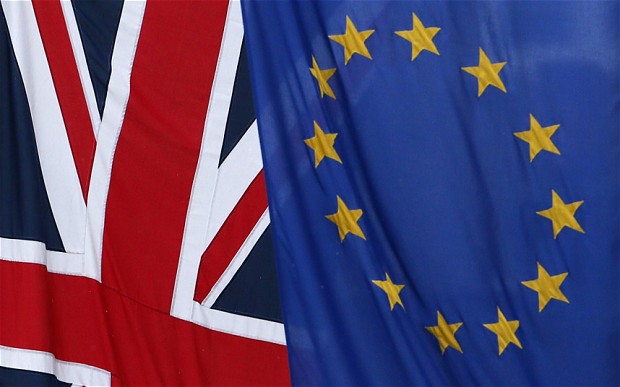
Britain: Economists overwhelmingly reject Brexit in boost for Cameron

Nine out of 10 of Britain’s top economists working across academia, the City, industry, small businesses and the public sector believe the British economy will be harmed by Brexit, according to the biggest survey of its kind ever conducted.

A poll commissioned for the Observer and carried out by Ipsos MORI, which drew responses from more than 600 economists, found 88% saying an exit from the EU and the single market would most likely damage Britain’s growth prospects over the next five years.

A striking 82% of the economists who responded thought there would probably be a negative impact on household incomes over the next five years in the event of a Leave vote, with 61% thinking unemployment would rise.

Those surveyed were members of the profession’s most respected representative bodies, the Royal Economic Society and the Society of Business Economists, and all who replied did so voluntarily.

Paul Johnson, director of the independent Institute for Fiscal Studies, said the findings, from a survey unprecedented in its scale, showed an extraordinary level of unity. “For a profession known to agree about little, it is pretty remarkable to see this degree of consensus about anything,” Johnson said. “It no doubt reflects the level of agreement among many economists about the benefits of free trade and the costs of uncertainty for economic growth.”

The poll also found a majority of respondents – 57% – held the view that a vote for Brexit on 23 June would blow a hole in economic growth, cutting GDP by more than 3% over the next five years. Just 5% thought that there would probably be a positive impact.

The economists were also overwhelmingly pessimistic about the long-term economic impact of leaving the EU and the single market. Some 72% said that a vote to leave would most likely have a negative impact on growth for 10-20 years.

Just 4% of respondents who thought Brexit would mostly likely have a negative impact on GDP over the initial five years said it would have a positive effect over the longer term.

The findings – which come as 37 faith leaders write in a letter to the Observer warning that Brexit will damage the causes of peace and the fight against poverty – will bolster David Cameron and George Osborne, who have both argued strongly that the economy will be hit hard in the event of Brexit.

Read more: Economists overwhelmingly reject Brexit in boost for Cameron | Politics | The Guardian

Sunday, May 29, 2016

EU-USA-TTIP: Obama’s Push for a New Transatlantic Relationship ( "with many flaws") - by Judy Dempsey

"TTIP not as good as being advertised"
U.S. President Barack Obama has only nine months left in office. He now seems a man in a hurry. During his visit to Europe on April 21–25, he made a big pitch for the proposed Transatlantic Trade and Investment Partnership (TTIP), which would radically change the functioning of trade between European and U.S. companies.

Speaking in the German city of Hannover, where he opened one of the world’s biggest trade fairs, he told German Chancellor Angela Merkel and scores of leading company executives how time was slipping by to clinch this trade deal. “If we don’t complete negotiations this year, then upcoming political transitions in the United States and Europe would mean this agreement won’t be finished for quite some time,” he said.


Obama’s pitch is long overdue. TTIP is not only about establishing a trade deal that would set crucial standards for how business is conducted. It is also about underpinning if not reviving the West’s liberal economic order, which is coming under massive pressure from Russia and particularly China.

After annexing Crimea in 2014 and later invading parts of eastern Ukraine, Russia is now meddling in Europe through a sophisticated propaganda campaign that does everything to publicize populist and Euroskeptic movements and anti-U.S. sentiments.

Russia is doing everything possible to rattle NATO weeks before the alliance holds a summit in Warsaw, where it will discuss how to improve the security of its Eastern members in the face of increasing Russian intimidation.

Europe’s divisions over refugees and TTIP also play into the hands of Russian President Vladimir Putin. A weakened Europe and a weakened transatlantic relationship are to Russia’s benefit. And to China’s.
Second only to the United States in terms of economic power, China is making a big bid to set new trading standards through its sheer size and political ambitions. Beijing’s huge investments in Africa and Latin America are about seeking allies to assert its authority and influence on the global stage.

That is why TTIP matters. If the deal does not go ahead, the West will have lost a major chance to regain its influence and set trading standards for the coming decades. Above all, Europe and the United States will have lost the opportunity to build a new transatlantic relationship, as the old one, built from the carnage of World War II, increasingly lacks the strategic importance and direction that it once had.

Despite the political and strategic significance of TTIP, European leaders have shied away from speaking out in favor of the deal. Merkel has rarely weighed in on an issue that has so far been successfully hijacked by a highly organized anti-TTIP campaign, not just in Germany but across Europe. Hours before Obama’s arrival in Hannover, tens of thousands of people demonstrated against TTIP.

Critics of TTIP insist that only big corporations will be the winners, that the United States will reap most of the benefits, and that consumers across Europe will be affected by lower standards when it comes to food protection and social issues.

Tell that to Germany’s Mittelstand, the medium-sized companies that are the backbone of the country’s economy. The German mechanical engineering industry, for example, ships more than €16 billion ($18 billion) of goods each year to the United States.

But don’t think a gadget made in Germany can be sold in its original form to a U.S. retailer. “We have to replace our EU plugs with US plugs, even though they essentially look the same, have the same safety characteristics and perform the same function,” said Carl Martin Welcker, vice president of the German Mechanical Engineering Industry and managing partner of Alfred H. Schütte, a machine tool factory.

“We are not just talking about plugs. We use the metric system to standardise our threads, whereas the USA measures in inches – so we have to change the threads in certain safety pipes,” he added. “The EU and the USA even have different requirements when it comes to the content of operating instructions. We end up producing the same machine twice, only differently. We have to buy materials twice, store materials twice. Machines have to be tested twice and approved twice.”

Just imagine the extra costs if a European company wants to enter and compete in the U.S. market. TTIP would do away with these different standards, in turn creating more jobs for European companies—and cutting production costs. These benefits are rarely articulated, just as the long-term strategic implications of TTIP are almost never discussed.

Instead, TTIP has become associated with populist, Euroskeptic, and antiglobalization movements. And there is more than a tinge of anti-Americanism, as Obama surely sensed during his visit to London on April 22–24. Indeed, his public support for Britain to remain in the EU and his pleading for European leaders to support TTIP were really about the United States wanting a stronger Europe and a revitalized transatlantic relationship.

Unless there is a major shift across Europe in the coming months, Obama’s bid to clinch what would be a historic trade deal will elude him. Russia and China will no doubt be relieved.


Note EU-Digest: The above report in favor of the TTIP , put together by a a US Democratic Party supported Think-Tank also contains some major omissions which are not in favor of this TTIP. 


These include:


The disappearance of jobs in some sectors

Increased international competition will lead to fewer jobs in some sectors. Research has shown, for example, that jobs will be lost among producers and exporters of machinery and meat. The Netherlands is looking for ways to compensate for job losses. The Minister for Foreign Trade and Development Cooperation is consulting the trade unions on this issue.

TTIP must not have a negative impact on our European social model. The government seeks to safeguard labour relations and terms of employment in the Netherlands. The government has asked the Social and Economic Council (SER) for advice on protecting labour standards in TTIP.

Concerns about lower standards

There are concerns that TTIP will lead to lower European standards. Like standards on food safety, the environment, privacy and labour conditions. TTIP’s benefits must not be brought about at the expense of people, animals and the environment. The Netherlands and the EU want to see firm guarantees to this effect in the agreement. See What guarantees does the EU want to see in TTIP?

Concerns about TTIP’s impact on low- and middle-income countries

TTIP could have an adverse impact on some low- and middle-income countries and their products. Yet TTIP’s benefits for these countries seem to outweigh the disadvantages. Higher economic growth in the US and the EU means, for example, more market opportunities for other countries, including poorer ones. The agreement should also make it easier for developing countries to export to the EU and the US.

The economic benefits of TTIP must not be enjoyed at the expense of low- and middle-income countries. The Netherlands believes that the agreement must offer just as many benefits to these countries, too. It has consistently called for a focus on these countries’ interests. The Minister for Foreign Trade and Development Cooperation has commissioned a thorough study of TTIP’s impact on them. 

Concerns that companies will be able to do as they please

Some civil society organisations are concerned that the investment protection provided by TTIP will give companies too much power. They fear it will limit governments’ democratic scope to make laws and regulations. This is known as the regulatory chill effect. Foreign investors that feel they 
have been disadvantaged can, for example, challenge a government decision

The Netherlands and the EU want to see a chapter on investment protection in TTIP that will prevent this from happening. That can be achieved by setting clear rules for conflicts between governments and investors. TTIP presents an opportunity to improve the traditional system of investment protection. The European Commission and the Netherlands are pressing for balanced system of investment protection that precludes abuse.

Read more: Obama’s Push for a New Transatlantic Relationship - Carnegie Europe - Carnegie Endowment for International Peace

Saturday, May 28, 2016

Apocalyptic Predictions: Countdown to Extinction - by Michael Lind

According to the online website The Death Clock, a man born on my birthdate can be expected to die 20 years from now in 2036. This assumes, however, that the entire human race does not become extinct before the estimated date of my demise.

In a February 9, 2012 post on the blog Arctic News, Malcolm Light writes there will be “Global Extinction within one Human Lifetime as a Result of a Spreading Atmospheric Arctic Methane Heat Wave and Surface Firestorm.” Light predicts “This process of methane release will accelerate exponentially, release huge quantities of methane into the atmosphere and lead to the demise of all life on earth before the middle of this century.” For those interested in more specific dates, Light has done the calculations:

The absolute mean extinction time for the northern hemisphere is 2031.8 and for the southern hemisphere 2047.6 with a final mean extinction time for ¾ of the earth’s surface of 2039.6 which is similar to the extinction time suggested previously from corrrelations between planetary orbital mechanics and the frequency increase of Great and Normal earthquake activity on Earth (Light, 2011). Extinction in the southern hemisphere lags the northern hemisphere by 9 to 29 years.

This certainly sounds scientific, doesn’t it? Light’s blog post is complete with charts and graphs and seemingly-precise figures. But his analysis has not undergone peer review by scientists or publication in a peer-reviewed journal. Not that any of that matters if we’re all about to die!

“If it bleeds, it leads,” the saying among editors goes. Predictions of imminent human extinction by scientists, or people who pretend to be scientists, are sure to be picked up during slow news cycles. “Humans will be extinct in 100 years says eminent scientist” screamed the headline on June 23, 2010 in Phys.Org. Frank Fenner, an emeritus professor of microbiology in Australia who had helped to eliminate smallpox, predicted that the human race would be gone within a century, thanks to climate change and overpopulation.

Fenner told The Australian he tries not to express his pessimism because people are trying to do something, but keep putting it off. He said he believes the situation is irreversible, and it is too late because the effects we have had on Earth since industrialization (a period now known to scientists unofficially as the Anthropocene) rivals any effects of ice ages or comet impacts.

Fenner passed away at the age of 95 in the same year, 2010, in which he made his apocalyptic prediction. But belief in the near-term extinction of the human race is a hardy perennial. “Steven Hawking Warns Humanity Could Destroy Itself in the Next 100 Years,” according to a headline of January 19, 2016. The culprits? The usual suspects —global warming and/or nuclear war — plus, genetically-engineered viruses. On a previous occasion he suggested that intelligent machines “could spell the end of the human race.”

It should come as no surprise that there is a Near Term Human Extinction movement (not to be confused with the anti-natalist Voluntary Human Extinction movement). Among its leaders are a retired natural scientist at the University of Arizona named Guy McPherson, who runs a blog called Nature Bats Last. In an October 4, 2014 blog post McPherson portrayed himself as a spurned prophet:

    I abandoned the luxury-filled, high-pay, low-work position I loved as a tenured professor to go back to the land. I led by example. Vanishingly few followed. I’m reminded of the prescient words attributed to American existential psychologist Rollo May: “The opposite of courage in our society is not cowardice, it is conformity.”….I no longer communicate with most of those colleagues, friends, and family. It’s too difficult to justify the occasional conversation.

He is not the first to feel this way:

    But Jesus said unto them, a prophet is not without honour, but in his own country, and among his own kin, and in his own house. (Mark 6:4, KJV).

The method of many near term human extinction believers is to take the worst case scenarios from numerous projections, without treating them as low-probability events. In the case of my own extinction, it is possible that I will be killed, as Valerius Maximus reported that the Greek poet and playwright Aeschylus was killed, by a passing eagle that drops a tortoise on my head, but the odds are very low.

The near term human extinction movement has been subjected to devastating criticism by scientists and well-informed journalists, many of whom think climate change is a genuine danger. Critiques are easily found on the Internet and I will leave them as an exercise for the reader.

What I want to focus on here is the psychology of the apocalyptic mind. It is a subject which has fascinated me since my childhood in Texas, where I enjoyed listening to radio broadcasts by evangelical Protestant interpreters of “prophecy.” Every Sunday a preacher could be heard, interpreting current events in light of the Book of Revelation. This or that nation in the European Economic Community, the predecessor of the European Union, was one of the ten horns on the seven heads of the dragon in Revelation. For those who could read the Signs of the Times, it was clear that the latest crisis in the Middle East or in the Cold War proved that the Last Days were about to begin. In the next few years the seven-year Tribulation would begin, complete with the Battle of Armageddon, the Second Coming of Jesus Christ, and the beginning of the Millennial Kingdom of Christ on earth. It was all great fun.

My introduction to the secular environmentalist version of apocalyptic thinking occurred when I, at the age of 10 or so, received a letter from the great marine biologist Jacques Cousteau, whose television program about undersea exploration mesmerized me and countless other young viewers. “Dear Michael,” the great man began. I was very excited until my parents explained that it was a fundraising form letter.

According to Jacques Cousteau, pollution was destroying the world’s environment (this was in the 1970s, before global warming had displaced pollution as the greatest danger to humanity in Green thinking). By 1984 all of the plankton in the oceans would die, the oxygen in the earth’s atmosphere would become extinct, and…well, you know. Disaster might be averted by a tax-deductible contribution to Jacques Cousteau.

I don’t remember whether I sent money or not. But I do recall being extremely anxious on New Year’s Eve, 1983. After the ball dropped in Times Square, I took a deep breath … and discovered that there was still oxygen in the earth’s atmosphere in 1984, notwithstanding the prediction of my childhood scientist-hero.

The structure of apocalyptic predictions is similar, whether they are religious or scientific. Timing is everything. The apocalyptic event, be it the Second Coming or human extinction as a result of nuclear war, Peak Oil or climate change, has to be in the near term future, to generate excitement. Nobody is going to join a sect whose prophet claims that Jesus will return on May 2, 4158 A.D. And no news outlet in search of eyeballs is going to publish this headline: “Scientist predicts human race will become extinct within the next 10 to 20 million years.”

If the apocalypse can be averted or postponed by individual or collective repentance, then you need two futures: the near term future, in which human action can avert the catastrophe, and the medium term future, in which catastrophe is inevitable if human action is inadequate in the near term future. Much environmentalist writing takes this form: If humanity does not act within the next X years, then global disaster will take place in Y years.

Frequently X — the short term period in which action may still be effective — is 10-15 years, while Y is around 30 years. These numbers make psychological sense. Arguing that we must act in the next decade or so can inspire people more than insisting that something must be done in the next half century. And global doom in the next three decades creates a greater sense of urgency than global doom in the next three centuries or the next three millennia or the next three hundred thousand years.

Examples of the 10-year rule and the 30-year rule were provided by Al Gore in 2006, in an interview with the Associated Press accompanying a screening of his documentary An Inconvenient Truth.

First, the 30-year timing, if the apocalypse is not averted (“a few decades”):

    If the pace of pollution continues, Gore’s projections for carbon-dioxide levels are off the charts within a few decades.

    Among the worst-case consequences: A new ice age in Europe, and massive flooding of regions in India, China and elsewhere that could make refugees of tens of millions of people.

Then, the 10-year rule for effective, short-term action:

    And politicians and corporations have been ignoring the issue for decades, to the point that unless drastic measures to reduce greenhouse gases are taken within the next 10 years, the world will reach a point of no return, Gore said.

10 years have now passed since Gore warned that we had only ten years to avert “a true planetary emergency.” Humanity failed to unite and act in time. So I reckon there is nothing to be done, except to reconcile ourselves to the coming global catastrophe “within a few decades.”

Will the human race in the near future be wiped out by a methane-caused firestorm —Malcolm Light’s prediction—or, at least in Europe, by a new ice age, as in Al Gore’s 2006 prophecy? Like Robert Frost, I would prefer the former:

    Some say the world will end in fire,

    Some say in ice.

    From what I’ve tasted of desire

    I hold with those who favor fire.

But it doesn’t really matter—if you’re extinct, you’re extinct. And extinction may not be as bad as people make it out to be. To quote the humorous verses that Ogden Nash wrote to accompany the section of “The Carnival of the Animals” by Camille Saint-Saens entitled “Fossils”:


Read more: Countdown to Extinction | The Smart Set

Friday, May 27, 2016

Freedom of Expression: Media Terror: Press Freedom in Turkey, Mexico and Russia

Turkey is ranked 151st out of 180 on press freedom as of 2016, according to the Reporters Without Borders’ annual Press Freedom Index.
2. That makes it the third-worst performer among the G-20 nations, after China and Saudi Arabia (165th).
3. As recently as 2006, Turkey ranked in the top 100 nations in terms of press freedom.
4. Turkey’s ranking has fallen in recent years because of increasing political pressure on journalists and the return of war at home and abroad.
5. The government also vigorously prosecutes alleged “insults” against top officials and seizes control of newspapers that it accuses of “terrorist” support.
6. Mexico ranks the next-worst (149th) in the G-20 after Turkey – and is the most dangerous country in the Western hemisphere for journalists.
7. Mexican drug gangs have used brutal tactics to intimidate the journalists reporting on their activities. Scores of journalists have been openly murdered.
8. Mexico in 2016 ranks next to Russia (148th), which makes the latter the fifth-worst performer among the G-20 nations.
9. Since Vladimir Putin’s return to the presidency in 2012, the repression and consolidation of the media in Russia have been stepped up.
10. Russia also stands out because of its systematic failure to punish, or even pursue, those who have attacked or murdered journalists.

Read more: Media Terror: Press Freedom in Turkey, Mexico and Russia - The Globalist

Thursday, May 26, 2016

France: McDonald's French HQ searched in tax probe

French investigators searched McDonald's French headquarters on May 18, targeting the U.S. fast food chain in a tax probe, sources with knowledge of the matter told Reuters on Thursday.

One of the sources said a preliminary inquiry had been opened after former investigating magistrate and politician Eva Joly filed a lawsuit in December on the behalf of an employee committee.

"A search was indeed carried out at McDonald's headquarters in France on May 18," the other source said, confirming a report first carried by Les Echos business daily.

Read more: McDonald's French HQ searched in tax probe: Sources