ANNUAL ADVERTISING RATES FOR INSURE-DIGEST

Annual Advertisement Rates

Wednesday, January 10, 2018

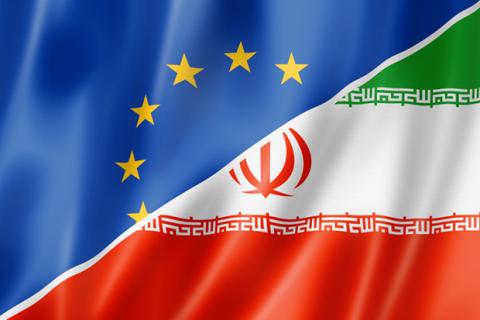
EU-US Relations: America’s Relationship With Europe: Collateral Damage if Trump Kills the Iran Deal - by Trita Parsi

Image result for EU Iran Flag
Iran Nuclear deal as Atlantic Alliance Crumbles
“The fact that the U.S. is reducing its role in world affairs cannot be tied to the policies of a single president,” Germany’s Foreign Minister Sigmar Gabriel said last month in a stunning speech. “There will be no major changes to this trend, also after the next election.” What was once only whispered is now clearly said: Europe is readying itself for a post-American world, even after the end of the Donald Trump era. And in a surprising twist, the fate of the U.S.-European Union axis may come down to what Trump decides to do with the Iran nuclear deal later this month.

Many drew a sigh of relief back in December as the congressional deadline to impose new sanctions on Iran passed. The nuclear deal had survived another challenge, they thought. But the celebrations were premature. Trump can kill the deal this week by simply doing nothing. We’ve seen this movie before—but this time America’s relationship with Europe is at the center of the drama.

Every 120 to 180 days, the United States is obliged to renew sanctions waivers under the nuclear deal. Failing to do so would put the U.S. in violation of the agreement and likely spark retaliatory measures by Tehran that could see the entire initiative fall apart. Every time the waivers have been up for renewal, fears have risen that Trump will quit the deal  simply by doing nothing.

This time around, though, it’s particularly worrisome. Trump punted the nuclear question to Congress last October by failing to certify it. This triggered a process that gave Congress 60 days to pass new sanctions on Iran or “fix” the deal through other measures. If it failed to do so, Trump promised he would “terminate” the agreement. The protests in Iran, which Trump sees himself as a champion of, have made a confrontational position towards the Iranian regime all the more likely.

But this time around, the survival of the nuclear deal is no longer just about Iran’s centrifuges and sunset clauses. It’s about whether the EU will see the U.S. as a pillar of the liberal international order or as a fifth column seeking the it’s demise. The nuclear deal has become the latest, and perhaps most consequential, international agreement or norm that the EU seeks to uphold and Trump seeks to tear down: from the Paris agreement, to the future of NATO, to the unity of the EU, to the funding of the United Nations, to the status of Jerusalem.

To Europe, two new realities have become clear. First, if the EU acquiesces on the nuclear deal, Trump will move on to target another agreement, and then another, and then another, until the very foundation of the current international order is uprooted. This will eventually force the EU to draw a line in the sand and stand up to Trump. Logic then dictates the longer the EU waits, the more damage Trump will do before he’s stopped. Hence, the EU is better off taking its stand at the Iran deal than waiting for it to be scrapped and emboldening Trump further.

Thus, EU policy chief Federica Mogherini said in mid-December that preserving and implementing the 2015 nuclear deal with Iran is “an absolute must,” in one of her sharpest criticisms of Trump’s Iran position. “We cannot afford to undermine the credibility of a multilateral agreement, endorsed by the UN Security Council Resolution,” she added.

Europe’s second realization is more ominous: Trump is not an anomaly. He may be a political outsider, but he is not an outsider to America. His presidency is the manifestation of a deep-seated sentiment in the United States that existed long before Trump entered the political arena and which will continue to exist—if not dominate politically—long after he departs. As such, neither electoral defeat nor impeachment will be enough to restore American “normalcy” because Trump is very much a part of the new “American normal.”

Germany’s Gabriel gave the clearest hints as to Europe’s new thinking last month. While he urged the Trump administration to “help develop joint strategies that preserve both the liberal international order and a global trade system that rests on a foundation of freedom, fairness, human rights and the rule of law,” he was also clear-eyed that to the U.S., the world is no longer a “global community, but rather an arena in which nations, non-state actors and corporations fight to gain advantage.”

As such, the U.S. is “no longer responsible for underpinning the structure and dome of this arena. Rather, it is one of the combatants on its sandy floor.” This leaves the EU with no choice but to chart its own way rather than submitting to American diktats—particularly on the issue of killing the Iran deal, which Gabriel said would “jeopardize” the security of the European Union.

Trump may see an irreparable break with the EU as a bonus of jettisoning the nuclear agreement. But by putting the U.S.-EU axis at risk, even the most die-hard opponents of the deal should know that they may get more than they ever bargained for.

Read moire: America’s Relationship With Europe: Collateral Damage if Trump Kills the Iran Deal | The American Conservative

Tuesday, January 9, 2018

Brexit: Where Brexit will hurt most in Europe – by Jacopo Barigazzi

The impact of Brexit will vary considerably across the European Union, with some regions bracing for severe costs and others less exposed.

That’s the message from data collected by the EU’s Committee of the Regions on the predicted local economic and cultural fallout of the U.K.’s departure from the bloc. The document, made up of questionnaire responses submitted by local officials and obtained by POLITICO, reveals a detailed and diverse patchwork.

The findings is sure to bolster the view among Brexiteers that there may be divisions on the EU side that can be exploited to Britain’s advantage in Phase 2 of the negotiations, which are due to start within weeks. So far, the EU has demonstrated rock-solid unity over the three divorce issues of citizens’ rights, the Brexit bill and the Northern Irish border.

But that may be harder to sustain when talks touch on issues for which countries (and regions within countries) have differing interests.

EU leaders are aware of the danger. French President Emmanuel Macron warned on Friday that the EU27 must present a “united front” or risk an outcome “unfavorable to the European Union and thus to each one of us.”

Friday, January 5, 2018

EU - Cuba Relations: As U.S. Retreats, EU Moves to Strengthen Ties With Cuba

The European Union’s top diplomat, Federica Mogherini, arrived in Cuba on Wednesday to help strengthen member countries’ economic and political ties with the Communist-run island.

Mogherini’s visit “reconfirms the strong EU-Cuban relationship,” and she will press for an “ambitious and swift joint implementation of the Political Dialogue and Cooperation Agreement,” the EU said in a statement.

As the U.S.-Cuba rapprochement unfolded in 2015-2016 the EU dropped all sanctions and negotiated the agreement, the first accord between Cuba and the 28-nation bloc.

Signed in December 2016 and ratified in November, the EU said at the time that it hoped to position its companies for Cuba’s transition to a more open economy and allow the EU to press for political freedoms on the island.

Read more: As U.S. Retreats, EU Moves to Strengthen Ties With Cuba | Fortune

Wednesday, January 3, 2018

EU Unity: The EU political agenda must be set by ordinary citizens says expert

Arguing for an alternative vision of European cooperation, political scientist Richard Youngs told EURACTIV that an EU rethink must include new voices and involve a fully participative process of consultation, in line with what French President Emmanuel Macron has proposed in recent months. In his new book, Youngs describes how that can be achieved.

Richard Youngs is a senior fellow at Carnegie Europe and a professor of international relations at the University of Warwick. He has authored eleven books. His latest is titled Europe Reset: New directions for the EU.

He spoke to EURACTIV’s editor-in-chief Daniela Vincenti.

Read the full interview: Expert: The EU political agenda must be set by ordinary citizens – EURACTIV.com

Tuesday, January 2, 2018

Global Forecast: 2018 may bring disastrous geopolitical event, says Eurasia Group

he world is moving toward crisis and a state of "geopolitical depression" as the presidency of Donald Trump accelerates divisions among citizens and the unraveling of the global order, risk consultancy Eurasia Group warns.

Liberal democracies are suffering from a deficit of legitimacy not seen since World War II, and today's leaders have largely abandoned civil society and common values, Eurasia Group says in its annual assessment of top geopolitical risks. The breakdown in norms opens the door to a major event that could rock the global economy and markets.

"In the 20 years since we started Eurasia Group, the global environment has had its ups and downs. But if we had to pick one year for a big unexpected crisis — the geopolitical equivalent of the 2008 financial meltdown — it feels like 2018," said Eurasia Group President Ian Bremmer and Chairman Cliff Kupchan.

U.S. global power is "sputtering to a stall" as the Trump philosophy of retrenchment and unilateralism sows confusion among both allies and rivals, Eurasia Group says. The world now lacks leadership to steer it through the impending crisis.

"'America First' and the policies that flow from it have eroded the U.S.-led order and its guardrails, while no other country or set of countries stands ready or interested in rebuilding it … significantly increasing global risk."

Here are Eurasia Group's top risks in 2018:

In the absence of U.S. leadership, China faces less resistance in setting the international standards in trade and investment, technology development and the value of noninterference in other countries' affairs. This could force businesses to adapt to a new set of rules and may increase tensions with the Asia-Pacific region's more democratic powers.

The world has become more dangerous because there is no global power to underwrite security and many subnational and nonstate actors can carry out destablizing actions. Cyberattacks and terrorism are two top risks, but there is also the chance of a miscalculation leading to conflict as North Korea continues to test ballistic missiles in a region full of U.S. allies and as the United States and Russia back rival factions in Syria.

The United States and China are racing to dominate areas like artificial intelligence and supercomputing, setting up a battle to supply other countries with civilian infrastructure, consumer goods and security equipment. This could lead to a fragmented tech space in which China and countries in its sphere of influence seek to control the flow of information and the United States guards against foreign investment in American tech companies.

The United Kingdom is moving toward a phase of its separation from the European Union that will bring more difficult negotiations, including designing a border for Northern Ireland and finalizing the U.K.'s divorce bill. Prime Minister Theresa May needs to clarify the U.K.'s goals to reach a deal with Europe, but as she reveals her hand, her leadership may be challenged by rival political factions with contradicting priorities.

Countries are using nontraditional measures — bailouts, subsidies and "buy local" requirements — to protect intellectual property and technology, a trend that can be called "protectionism 2.0." This could lead to a surge in protectionism, a more complex and contradictory regulatory environment, and resentment among countries whose policies are seen to target one another.

Read more: 2018 may bring disastrous geopolitical event, says Eurasia Group

Monday, January 1, 2018

EU Democeacy Requirements: Could The U.S. Pass The EU’s Democracy Test?

US Democracy: for sale to the highest Bidder
You’ve probably read that the European Union, after years of trying to duck the plain reality of Poland and Hungary ceasing to be democracies, has taken the first step towards denying Poland a vote in the European Commission. The EU’s basic treaty requires its members first and foremost to be democracies.

Here’s the backstory. Since Poland’s Law and Justice Party took power in 2015, the Polish ultra-nationalist leader, Jaroslaw Kaczynski, has felt stymied by the independent judiciary. In July 2017, the government drafted legislation to give Kaczynski control of the courts.

Other EU leaders warned of dire consequences, and Poland’s President, Andrzej Duda, a close ally of the government, surprised all by refusing the sign the law. Cynics said this was just a ploy to buy some time for a kinder, gentler version of the same scheme ? and they were right.

The government went back the drawing board and drafted new legislation. The original law vetoed by Duda simply got rid of the entire Supreme Court. The new law requires judges to retire at 65, which effectively gives the governing party control of a majority of all judges. The new law also revises the process for selecting judges, giving more control to the lower house of Parliament, which is controlled by the governing party. This time, Duda signed it.

The EU, which has repeatedly violated the sovereignty of member nations for the sin of running deficits, and extracted severe punishments that resulted in deeper economic collapse, has been extremely timid about enforcing Article 7 of the EU’s founding treaty, which requires all members to be democracies. This kind of tells you where the EU’s real priorities are.

And in Hungary, when the ruling Fidesz party gerrymandered legislative districts, giving the governing party a two-thirds majority in parliament and effectively making it impossible for the opposition to come to power, the EU leadership did nothing (apparently, killing democracy is less of a crime than running deficits.)  Hungary’s leader, Viktor Orban, also expanded the size of the Supreme Court, so that he could control it.

Up until now, the EU has not moved against either Hungary or Poland. But last week the EU’s leaders took the first step towards invoking sanctions under Article 7, the most serious of which would be to deprive Poland of a vote. Poland would continue to have all of the other benefits of EU membersh

This new courage on the part of Brussels, however belated and tentative, is an important step. But I wonder: If the United States were subjected to these tests, could it pass?

Take the case of gerrymandering. In 2012, states controlled by Republican legislatures and governors resorted to extreme gerrymandering, so that Republicans begin with a head start of 20 to 25 seats in the U.S. House of Representatives, relative to their share of the popular vote. Hungary, in rendering democracy purely formalistic, could learn a trick or two from the GOP.

And where courts are concerned, the Polish government is pretty tame compared to Republican Senate Leader Mitch McConnell. For the last six years of President Obama’s administration, when Republicans controlled the Senate, McConnell slow-rolled Obama’s judicial appointees, leaving a federal bench that will be controlled by Republican judges for a generation or more.

McConnell disgracefully blocked consideration of Obama’s nomination of Merrick Garland, an ideological moderate, to the Supreme Court. Thanks to this strategy of total blockage, when Trump took office there were 105 vacancies on the federal judicial bench, compared to just 54 when Obama took office.

So courts and legislative districts are increasingly rigged, just as in Poland and Hungary. The United States is still a democracy ? but a narrowed one.

The revulsion against Trump is so broad and deep, that we have a good shot at repairing the several elements that the Republicans have sought to destroy.

Trump gets most of the attention as a would-be dictator. But the “mainstream” Republican Party properly deserves most of the blame.

Read more: Could The U.S. Pass The EU’s Democracy Test? | HuffPost